
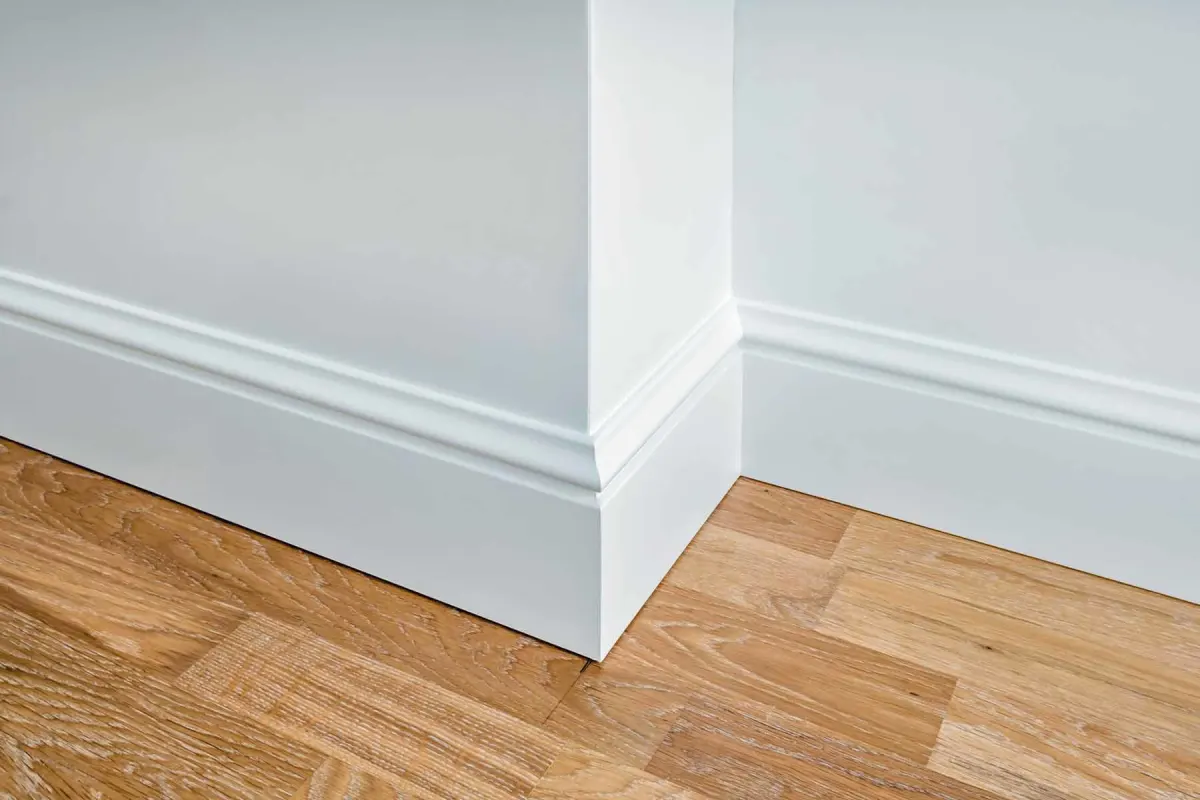
Baseboards cover the gap between wall and floor, protect paintwork from knocks and give a room a clean, finished edge. Many homeowners in Thailand now choose a Prefabricated baseboard (skirting, known as บัวพื้นสําเร็จรูป in Thai) over trim built on site, as it arrives ready-shaped, pre-finished and cut to standard lengths.
That convenience is useful, but not every product suits every home. A prefabricated skirting board that performs well in an air-conditioned Bangkok condo may warp or swell quickly in a ground-floor house in Chiang Mai or a seaside property in Phuket.
Before buying prefabricated baseboards (skirting), check the points below. Each one affects how long the trim lasts, how it looks and how much effort installation takes.
Match the Material to the Climate
Thailand’s humidity stays high for most of the year, and the rainy season adds even more moisture. Choose a material that can handle these conditions.
- PVC: Waterproof, termite-proof and low cost. Suits bathrooms, kitchens and ground floors.
- WPC (wood-plastic composite): Offers a timber look with better moisture resistance than real wood.
- Aluminium: Durable and modern. Works well in minimalist interiors and commercial spaces.
- MDF: Smooth and easy to paint, but swells when wet. Use it only in dry, upper-floor rooms.
- Solid timber: Teak or rubberwood looks attractive but needs treatment against moisture and insects.
Factor in Cleaning Habits
Many Thai households mop floors with water every day. A wet mop hits the base of the skirting each time. Pick a water-resistant material with a sealed bottom edge to prevent swelling, staining and mould.
Check Termite Resistance
Termites are common across Thailand and can destroy wooden trim from the inside. If you prefer a wood finish, confirm the product is pressure-treated or choose a composite or PVC alternative.
Choose the Right Height and Profile
Standard heights range from about 6 to 10 cm. Taller skirting of 12 to 15 cm suits high ceilings in older shophouses or modern villas. Flat, simple profiles fit contemporary condos. Moulded profiles suit classic or colonial-style interiors.
Confirm the Installation Method
Most Thai homes have plastered brick or concrete walls, which are rarely perfectly straight. Review how the product fixes in place:
- Adhesive: Quick, but harder to remove later.
- Clip systems: Allow easy removal for repairs or rewiring.
- Screws and wall plugs: Secure, but leave visible fixings unless covered.
Flexible materials such as PVC handle uneven walls better than rigid timber or MDF.
Look at Colour and Finish
Match the skirting to your floor, door frames or wall colour. Check that the finish resists UV fading if the room gets strong afternoon sun. Ask for a physical sample, as colours often look different on screen.
Plan for Cables
Some prefabricated profiles include a hollow channel for TV, internet or speaker cables. This keeps wiring tidy without cutting into concrete walls.
Measure and Budget Accurately
Measure the full room perimeter and subtract doorways. Add around 10% for cuts and waste. Compare prices per metre, and include accessories such as inside corners, outside corners, joiners and end caps in your total cost.
The right prefabricated baseboard depends on your climate, cleaning routine, wall type and interior style. Check each factor before you buy to avoid costly replacements and get a neat, long-lasting finish.