
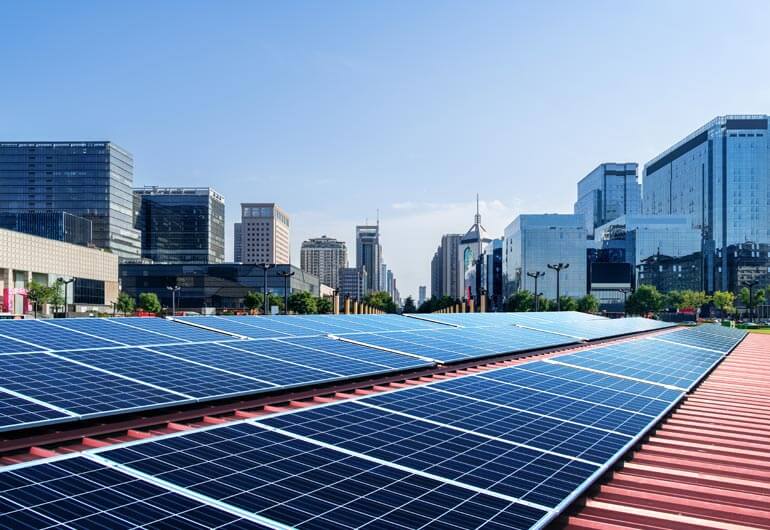
Hua Hin’s hotels, resorts, shops and offices run air conditioning for most of the year, and their electricity bills show it. Rooftop solar offers a practical way to cut daytime costs, but results depend on design. A system that suits a family home will not suit a 120-room hotel or a cold storage facility.
Good planning for solar in Hua Hin starts with how your building uses power, not with how many panels fit on the roof. The steps below separate a well-designed commercial system from an expensive mistake.
Start With Your Load Profile
Collect at least 12 months of electricity bills from the Provincial Electricity Authority (PEA). Note peak demand, monthly kWh and the hours when usage is highest. Most commercial solar Hua Hin installations perform best when panel output matches daytime demand. Hotels with heavy midday cooling loads, laundries and commercial kitchens are strong candidates.
If your property is on a time-of-use (TOU) tariff, solar offsets on-peak rates, which apply on weekdays from 09:00 to 22:00. That raises the value of every kWh your panels produce.
Size for self-consumption. Export options for commercial users in Thailand are limited, so surplus power sent to the grid earns little or nothing. Oversizing ties up capital without a return. Aim for a system where nearly all output is used on site.
Plan for the Coastal Climate
Hua Hin sits on the Gulf of Thailand, and salt air speeds up corrosion. Specify:
- Panels certified for salt mist resistance (IEC 61701)
- Aluminium or stainless steel mounting with stainless fasteners
- Inverters rated IP65 or higher, installed in shaded, ventilated spots
Heat also matters. Panel output drops as temperatures climb, and local rooftops regularly pass 60°C in April. Choose modules with a low temperature coefficient and leave a gap beneath panels for airflow.
Get Orientation and Tilt Right
At roughly 12.5° north latitude, a south-facing tilt of 10 to 15 degrees works well. This angle also lets monsoon rain wash away dust and salt. East-west layouts produce a flatter output curve, which can suit buildings with steady demand from morning to evening.
Check for shading from neighbouring buildings, palm trees and rooftop equipment. Partial shade on one panel can drag down a whole string. Use optimisers or microinverters where shading cannot be avoided.
Assess the Roof Before Installation
Commission a structural assessment. Panels and mounting add roughly 12 to 20 kg per square metre. Older metal sheet roofs may need repair or replacement beforehand, since removing an array later to fix leaks is costly.
Handle Permits Early
Commercial systems in Thailand need approval from several bodies, including the local municipality, the PEA and, for larger systems, the Energy Regulatory Commission. Grid-connected systems must use a PEA-approved inverter. Paperwork can take months, so start the process alongside design work.
Plan for Maintenance
Clean panels every two to three months during the dry season, and more often for properties close to the beach. Install remote monitoring so you can spot faults quickly. Budget for an inverter replacement around years 10 to 12.
Smart commercial solar design in Hua Hin comes down to three things: matching output to demand, protecting equipment from salt and heat, and securing approvals before work starts. Follow these steps and your system can deliver reliable savings for 25 years or more.